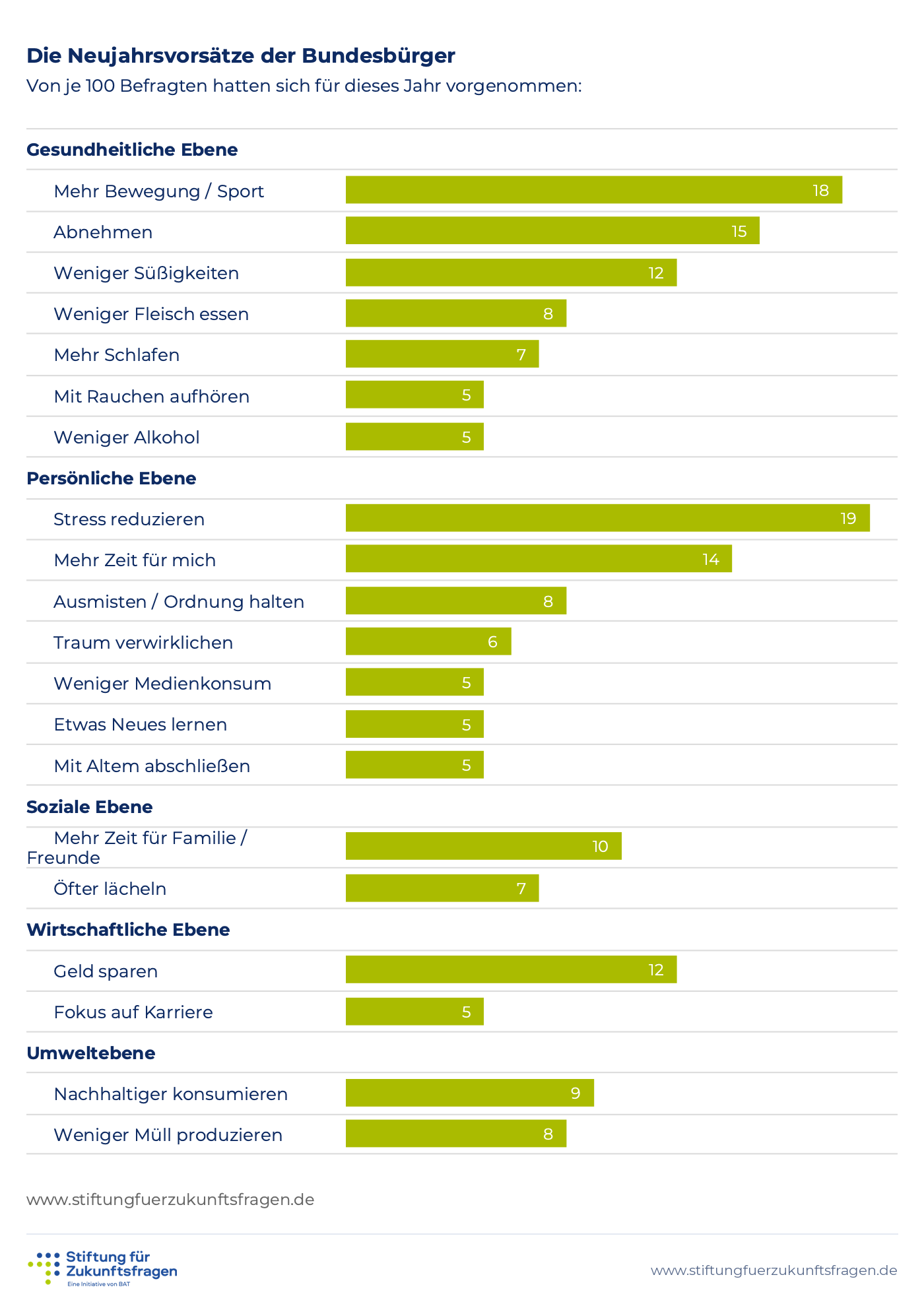
Roughly half of Germans regularly make New Year's resolutions. This year, many resolved to reduce their personal stress levels, invest more in their health, consume more sparingly and sustainably, and also have more time for others.
Within the population, it was primarily young adults who wanted to change their lives. They were about three times more likely to aim to focus more on their careers, learn something new, or break with the past – whether it was finally moving out, ending a relationship, or changing jobs. They were also twice as likely to want to reduce their time on smartphones, computers, or in front of the television, consume less sugar and alcohol, or exercise more.
In contrast, good intentions were significantly lower among retirees and young seniors who are more or less at peace with their lives and hardly want any changes.
Data as table
New Year's resolutions of German citizens: Health-related — Of every 100 respondents, the following were planned for this year:
More exercise / sport
18
Lose weight
15
Fewer sweets
12
Eat less meat
8
Sleep more
7
Quit smoking
5
Less alcohol
5
New Year's resolutions of German citizens: Personal level — Out of every 100 respondents, the following were planned for this year:
Reduce stress
19
More time for myself
14
Decluttering / Keeping things tidy
8
Making dreams come true
6
Less media consumption
5
Learn something new
5
Letting go of the past
5
New Year's resolutions of German citizens: Social level — Out of every 100 respondents, the following were planned for this year:
More time for family / friends
10
Smile more often
7
New Year's resolutions of German citizens: Economic level — Of every 100 respondents, the following were planned for this year:
save money
12
Focus on career
5
New Year's resolutions of German citizens: Environmental level — Out of every 100 respondents, the following were planned for this year:
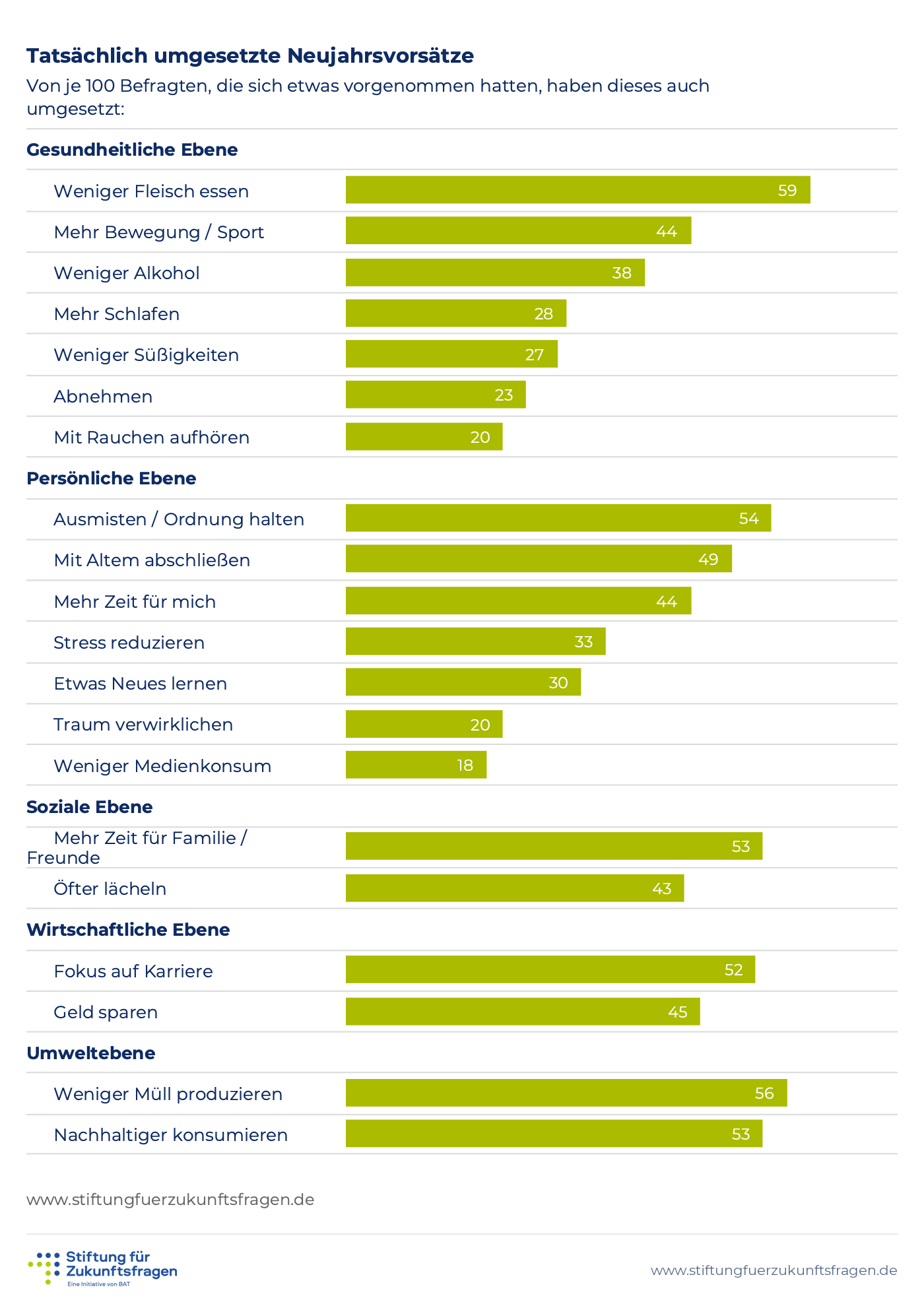
Regardless of age, the question with all New Year's resolutions is which ones are actually kept. And here, the picture for the past twelve months is rather disillusioning: of the 20 most common resolutions, only six were actually implemented by a small majority. The resolutions most successfully kept were eating less meat, reducing personal waste, decluttering, or focusing more on social relationships and career.
Significantly less successful were resolutions to live healthier, reduce stress levels, or fulfill a long-held dream. And not even one in five managed to reduce their own media consumption. Smartphones, in particular, have become indispensable in the daily lives of many, and conscious consumption requires more than just a good intention.
Data as table
Actual New Year's resolutions implemented: Health level — Of every 100 respondents who made a resolution, the following actually implemented it:
Eat less meat
59
More exercise / sport
44
Less alcohol
38
Sleep more
28
Fewer sweets
27
Lose weight
23
Quit smoking
20
Actual New Year's resolutions implemented: Personal level — Of every 100 respondents who made a resolution, the following number actually implemented it:
Decluttering / Keeping things tidy
54
Letting go of the past
49
More time for myself
44
Reduce stress
33
Learn something new
30
Making dreams come true
20
Less media consumption
18
Actual New Year's resolutions implemented: Social level — Of every 100 respondents who made a resolution, the following number actually implemented it:
More time for family / friends
53
Smile more often
43
Actual New Year's resolutions implemented: Economic level — Of every 100 respondents who made a resolution, the following number actually implemented it:
Focus on career
52
save money
45
Actual New Year's resolutions implemented: Environmental level — Of every 100 respondents who made a resolution, the following actually implemented it:
Changing one's preferences and behaviors is usually harder than expected. The temptations are too strong and the habits too comfortable to simply abandon. However, there are strategies to increase the chances of lasting change. Those who are most successful are generally the ones who tackle goals together with others, consider alternatives to their established patterns of behavior beforehand, and don't take on too much. Those who then manage to replace the old routine with a new one—for example, exercising at a specific time—have a good chance of actually achieving the desired changes.