


Beastly close: Zoo visits between changes and challenges
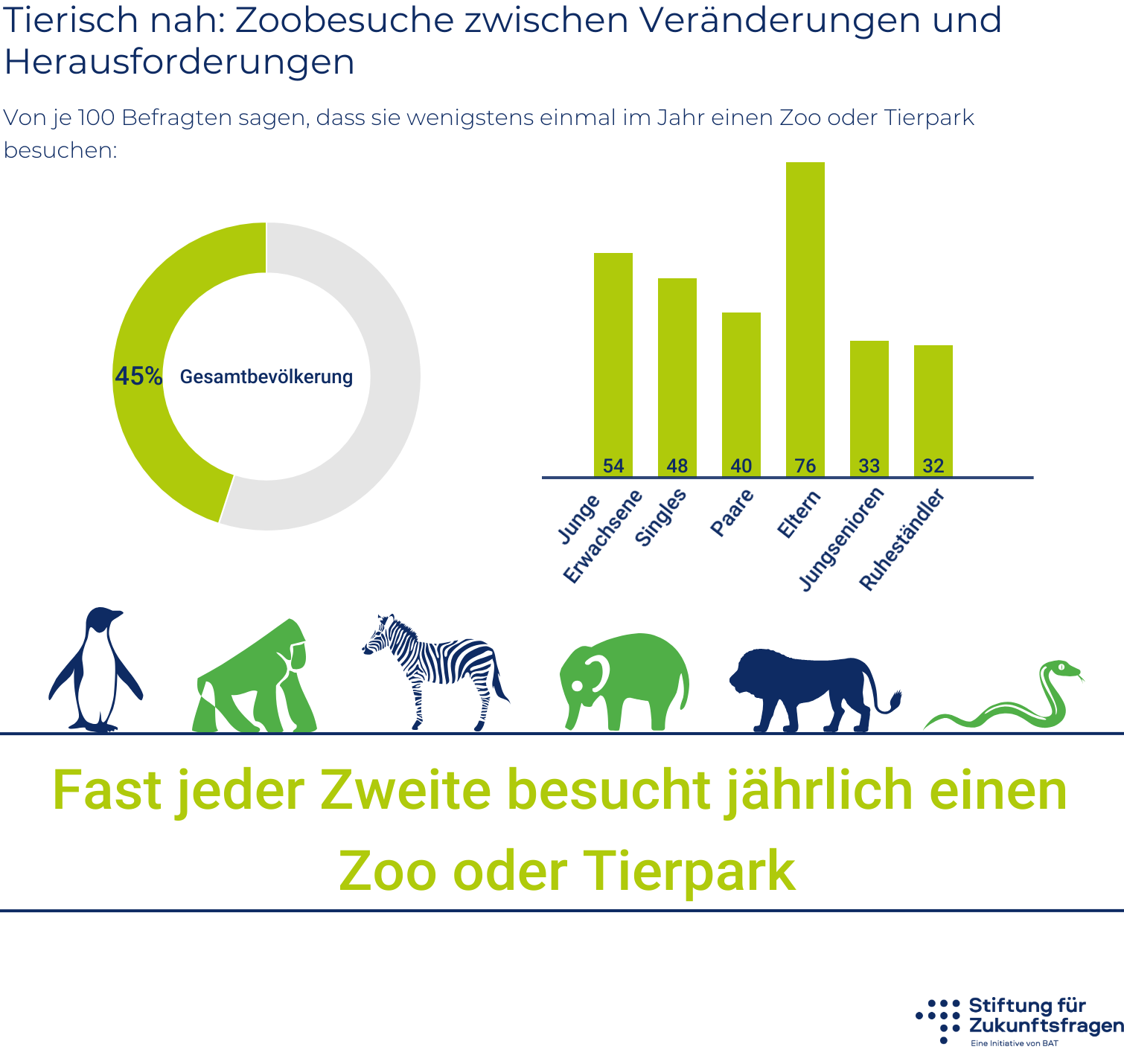
Of every 100 respondents, one in 100 said they visit a zoo or wildlife park at least once a year:
Young adults, couples, parents, singles, young seniors, retirees
Almost one in two people visits a zoo or wildlife park every year.
Data as table
| Total population | |
|---|---|
| No | 55 |
| Yes | 45 |
| 2022 | |
|---|---|
| Young adults | 54 |
| Singles | 48 |
| Couples | 40 |
| Parents | 76 |
| Young seniors | 33 |
| Retirees | 32 |
Result
Zoos and animal parks have long been popular destinations for day trips. This year alone, almost one in two Germans (45%) will embark on an expedition into the animal kingdom at least once. Around one in ten (9%) are regular zoo visitors and stroll past leopards, fur seals and the like at least once a month. Within the population, families in particular spend a lot of time at the zoo, while only around one in three young seniors and retirees are among the visitors.
Reasons
The reasons for visiting a zoo vary from person to person. The most common reason is certainly the opportunity to experience animals up close. In most facilities, visitors also have the opportunity to learn a lot about their behaviour, ways of life and habitat. Parents in particular appreciate this entertaining and educational leisure activity, as it allows their children to see animals that they normally only know from books or television. Special events such as feedings and guided tours are also particularly popular during a visit, allowing visitors to get even closer to the animals and ask questions themselves. Zoos are also places of recreation, invite you to go for a walk in nature, offer playgrounds and are usually easy to reach.
Forecast
Many zoos and animal parks have changed over the last few decades. Lattice cages and smaller enclosures, in which animal welfare could hardly be guaranteed, have become much rarer. Instead, there are larger enclosures, animals have retreat niches and the number of species has been reduced. Many facilities are also emphasising their contribution to species conservation and the preservation of endangered species, participating in breeding programmes, working to protect endangered species and offering educational programmes. This will undoubtedly help to welcome many more visitors in the future.
At the same time, however, the proportion of citizens who have concerns about species-appropriate husbandry, social structures and the stress level of the animals or who reject the basic principle of a zoo per se is also increasing. In addition, thanks to modern technologies (e.g. animal cameras, documentary films and livestreams), animals from all over the world can be seen from the comfort of your own home at any time without having to be kept in captivity. Zoos are also competing with a steadily increasing number of leisure facilities overall and are losing potential visitors, especially among their main target group, due to demographic change - increasing childlessness and smaller family structures. It can therefore be assumed that overall visitor numbers will fall in the future.