


Travel time to shopping
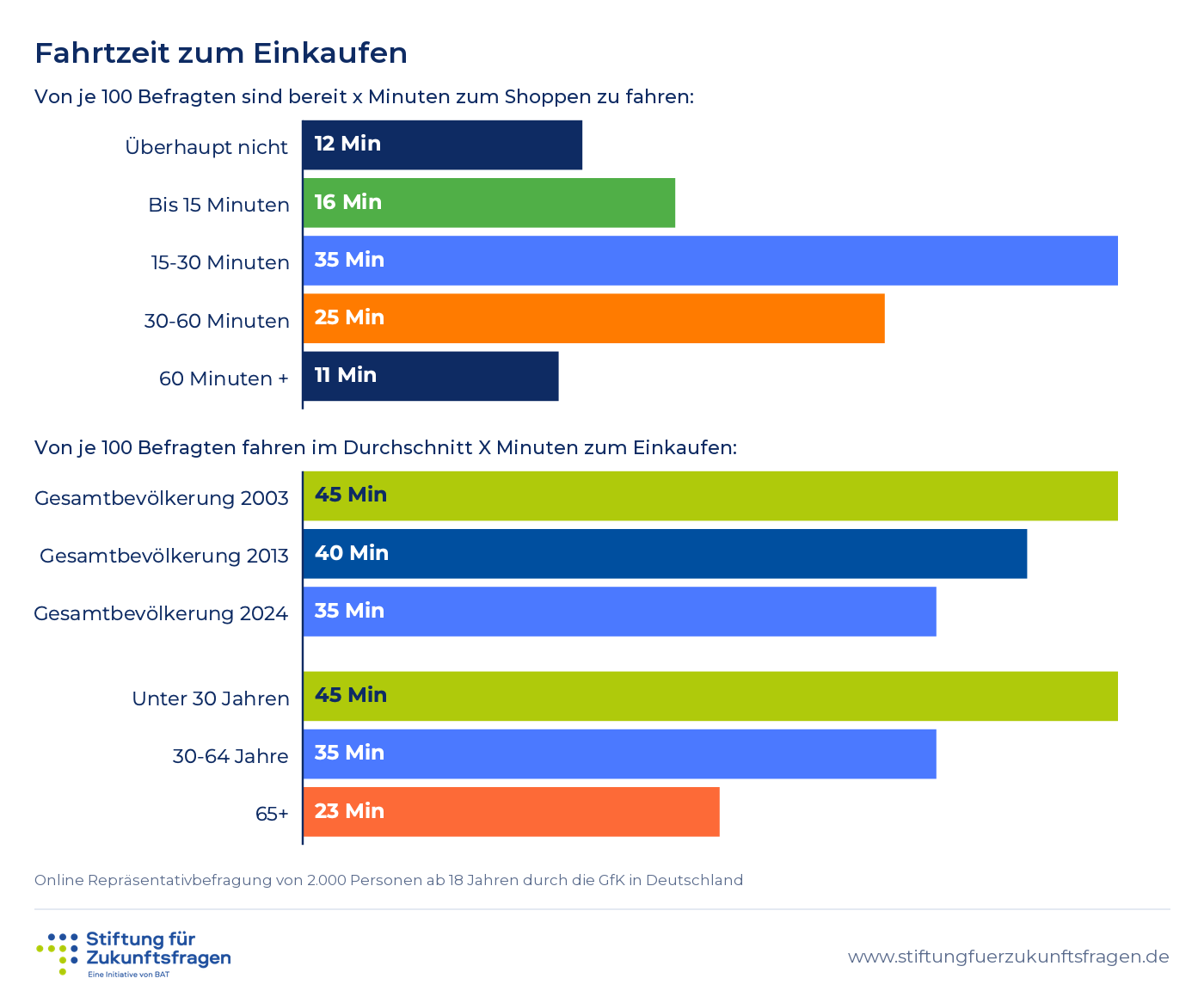
Out of every 100 respondents, x minutes are willing to travel to go shopping:
On average, out of every 100 respondents, they spend X minutes driving to go shopping:
Data as table
| Not at all | 12 |
| Up to 15 minutes | 16 |
| 15-30 minutes | 35 |
| 30-60 minutes | 25 |
| 60 minutes + | 11 |
| Total population 2003 | 45 minutes |
| Total population 2013 | 40 minutes |
| Total population 2024 | 35 minutes |
| Under 30 years | 45 minutes |
| 30-64 years | 35 minutes |
| 65+ | 23 minutes |
Result
People's willingness to spend time travelling to a shopping centre or pedestrian zone has decreased significantly in recent years. Whereas 20 years ago the average journey time was 45 minutes, it is now only 35 minutes. Within the age groups, it is particularly often the retired who prefer shorter journey times. In contrast, the average journey time for the under-30s is almost twice as high at 45 minutes.
Only nine percent of respondents are prepared to travel more than an hour to a shopping centre or pedestrian zone, while twelve percent are not prepared to make the journey at all.
Reasons
Online shopping has reduced the need to visit physical shops. Many now prefer to shop from the comfort of their own home - often at a lower price and with a larger selection. Another reason for the shorter journey times is the range of shopping centres and miles themselves. Many consumers feel that they come across a similar or interchangeable range of products everywhere and are hardly offered any individualised products. The above-average willingness of younger people to accept longer journeys is due to their interest in finding more than just shopping opportunities in shopping centres. For them, shopping centres are also meeting places where they have access to free Wi-Fi and are attracted by special offers.
Forecast
To compete in an increasingly digital world, shopping centres and pedestrian zones need to realign their focus. The overall experience should be made more appealing: from more service, less chain stores and more retail to the creation of meeting places. The shopping centres of the future could become what marketplaces used to be - places where people not only consumed but also socialised. To achieve this, however, they need to put people back at the centre.