


Leisure Time Monitor 2003
What costs less gains value!
A change in thinking among leisure consumers
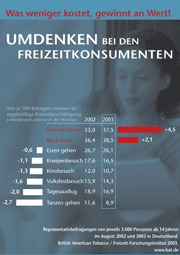
„"Leisure is near and dear to the hearts of Germans": What was successfully promoted for decades no longer holds true. The supposedly crisis-resistant leisure industry has now also arrived in the midst of an economic crisis. Leisure consumers have to cut back. Pubs, cinemas, and festivals are feeling the effects of declining visitor numbers. And nightclubs (2002: 11.61 million visitors – 2003: 8.91 million visitors) are also having to cope with falling revenues. This is according to the recently published "Leisure Monitor 2003," in which the BAT Leisure Research Institute has been conducting annual representative surveys of 3,000 people aged 14 and over on a total of 60 leisure activities since 1995.
„German citizens are having a new experience: leisure time doesn’t always have to cost money,” said Prof. Dr. Horst W. Opaschowski, the head of the institute.
Instead, reading books at home is being rediscovered (+2.1 percentage points compared to the previous year), and cycling is also experiencing a further upswing (+4.5). On the losing side are leisure activities that involve spending money: cinemas (-1.3), pubs (-1.1), and nightclubs (-2.7).
Leisure time is not just consumption time
Everyday leisure activities are taking on a more relaxing character. "Feeling good at home doesn't require expensive adventure programs or commercial wellness offers," says institute director Opaschowski. "Now there's enough time again for thoughts and conversations." Talking about important things (33%) or simply following one's own thoughts (36%) are among the regular leisure activities that are enjoyable and meaningful.
Busyness and constant activity are less in demand among German citizens. What seemed almost unimaginable to many in the eighties and nineties – „free leisure” – is now developing into a new art of living, a blend of personal initiative and self-reflection. This can also include consciously relaxing and doing nothing after work. Opaschowski: „Engaging with oneself says more about inner activity than outward activity.” In times of tight budgets, the appreciation for the value of time is increasing.
The new comprehensive data volume „Leisure Monitor 2003” contains – listed according to socio-demographic characteristics such as gender, age, education, income, life phase, etc. – detailed information on 60 different leisure activities, from television and PC to museum and theatre, to voluntary work in church, party, trade union or association.
In addition, 25 leisure activity profiles (e.g., internet, further education, cinema, church service, amusement park) are presented and briefly described.
The representative survey of 3,000 people aged 14 and over was conducted between [date] and [date].
Held from August 14th to September 10th, 2003.
See also directory of all publications
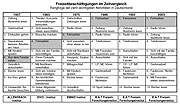
Appendix: Leisure activities of Germans since the 1950s
A leisure activity survey regularly conducted by the Leisure Research Institute of British American Tobacco makes it clear when comparing trends over time: Germans do not change their leisure behavior in the short term. While short-term trends or warm summers lead to temporary changes, someone who enjoys hiking, for example, tends to stick with it and doesn't suddenly become a cyclist.
On the other hand, hardly any development has shaped people's attitudes, behaviors, and lifestyles as profoundly as the changing nature of leisure time. New lifestyles are emerging and changing with noticeable dynamism. This has an impact on individuals and society.
In the late 1950s, the birth rate in West Germany reached its peak. The so-called "baby boom" led to "playing with children" becoming one of the most important leisure activities for families. The family was the true center of leisure. Regular visits to relatives were also among these family-related leisure activities. The six-day workweek also fostered the desire to use the remaining free time after work or on Sundays to get a good night's sleep. Whatever free time remained was then invested in the contemplative, yet sometimes social, pastime of "looking out the window"—an activity that has since almost died out.
In the early 1960s, gazing out the window was replaced by television. Playing with children became a focus on family. A decline in birth rates was becoming apparent. With the introduction of the five-day workweek, leisure needs also changed. People now rested and slept a little more, without necessarily needing to get a good night's sleep. At the same time, people's leisure activities were more dependent on social norms than they are today. One simply "had to" go to the theater, attend cultural events, participate in church community life, or improve one's general knowledge. These cultural and social activities do not reappear in the rankings of subsequent years.
In the mid-1970s, a significant shift in leisure activities began to take place: Media consumption, including reading magazines and newspapers, listening to the radio, and watching television, became the dominant form of leisure activity. All other activities were relegated to a secondary role. For the first time, the desire for idleness and relaxation emerged: "Resting without doing anything" ranked fourth among leisure activities – even ahead of housework or reading books.
In the mid-1980s, alongside media consumption, telephone use emerged as a dominant leisure activity. The telephone became an important tool for finding social connections. It served as a bridge to the outside world and simultaneously as a means of preventing boredom. At the height of the tennis craze, the sport appeared for the first time in the top ten list of leisure activities.
What vinyl records and cassette tapes were in the 1950s to 1980s, CDs became in the 1990s. Electronic leisure media became increasingly important. Against the backdrop of consumer stress and media overload, however, reading books remained a popular pastime – the quintessential medium of leisure. And the more hectic everyday life became, the greater the longing grew for peace, for lounging and doing nothing, or simply for sleeping in.
At the beginning of the third millennium, leisure consumers face two opposing forces: on the one hand, the ever-increasing number of options, and on the other, the scarcity of time and money. This leads consumers to allocate their precious free time more selectively. They can no longer experience everything and be at the forefront of every new trend from the very beginning. Now they have to carefully consider how they spend their time and money.
1957 / ALLENSBACH Institute
- Reading newspapers and magazines
- Gardening
- go shopping
- Repairs, minor work on the house
- Playing with children
- Looking out the window
- Sleep in thoroughly
- Read books
- Go to the cinema
- Visiting relatives and acquaintances
1963 / DIVO – Institute
- Attend theatre, concerts, and other events
- To rest, to sleep in
- visits
- Television
- Spending time with family
- Go on a shopping spree
- Chatting with neighbors
- Participate in club life
- Participate in church community life
- to improve his general education
1975 / EMNID Institute
- Read magazines and newspapers
- Listen to the radio
- Television
- Resting without doing anything
- Talking to neighbors
- House cleaning, cleaning
- Afternoon nap
- Playing with children
- Read books
- Sleep soundly through the night
1986 / BAT Leisure Research Institute
- Television
- Reading newspapers and magazines
- Listen to the radio
- Make a phone call
- Being with friends
- Sleep in
- Listen to LPs and MCs
- Gardening
- Laziness, inactivity
- to do sports
1993 / BAT Leisure Research Institute
- Television
- Reading newspapers and magazines
- Listen to the radio
- Make a phone call
- Sleep in
- Spending time with family
- Listen to CD / LP / MC
- Laziness, inactivity
- Gardening
- Read books
2003 / BAT Leisure Research Institute
- Television
- Listen to the radio
- Reading newspapers and magazines
- Make a phone call
- Spending time with family
- Sleep in
- Gardening
- Laziness, doing nothing
- Doing something with friends
- 10. Read books