

Chart of the week, 2024-KW43
24 October 2024
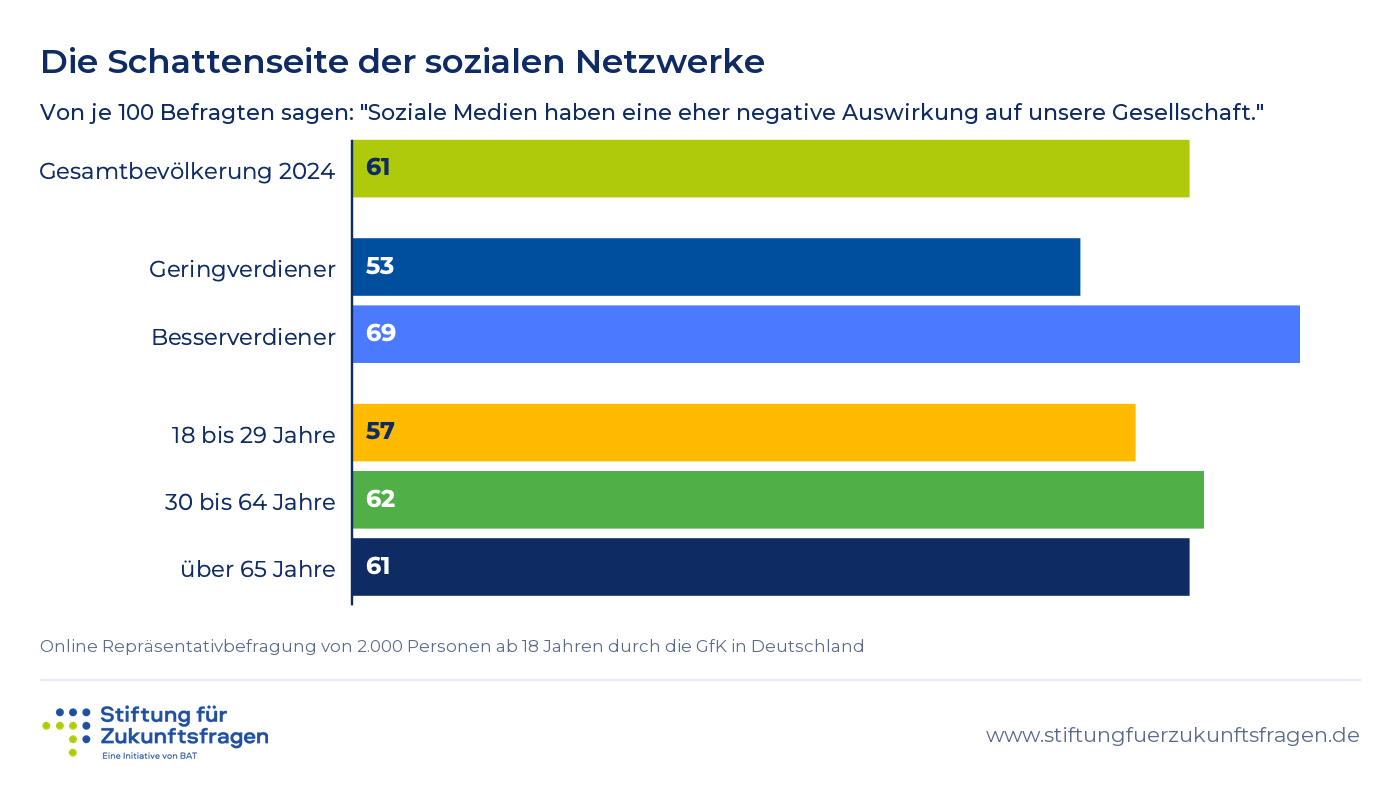
The dark side of social networks
Out of every 100 respondents, the response was: "Social media has a rather negative impact on our society.""
Data as table
| Total population 2024 | 61 |
| low-income earners | 53 |
| high earners | 69 |
| 18 to 29 years | 57 |
| 30 to 64 years | 62 |
| over 65 years | 61 |
Result
Two thirds of Germans are of the opinion that social media has a rather negative impact on society. This critical view is particularly widespread among the more educated. Scepticism towards platforms such as Facebook, Instagram and Twitter has increased. While social networks have long been valued for their ability to connect people and promote the free flow of information, the tide is now turning and a clear majority are increasingly critical of them. The criticism is that social media is a burden on social interaction, spreads misinformation and the anonymity and distance online means that respectful interaction with one another is lost.
Reasons
A key reason for the negative assessment of social media is the spread of disinformation, which weakens trust in reliable information. Algorithms often favour emotionally charged and polarising content that provokes outrage or anger. Echo chambers in particular reinforce divisions within society, as users primarily see content that confirms their own opinions. This blocks out other perspectives, which makes it difficult to exchange different views and reinforces extreme positions.
Another paradox is that, although social media is intended to promote networking, many users feel increasingly isolated. This „paradox of loneliness“ shows that digital interactions cannot replace real interpersonal contact and often intensify the feeling of loneliness.
There is also a great risk of social media addiction, especially for the younger generations. A permanent online presence can have a significant impact on personal well-being and lead to anxiety disorders and depression. The issue of cyberbullying is also a cause for concern. Due to the anonymity of the internet and the uncontrolled dissemination of content, young people in particular are often exposed to bullying.
Forecast
The critical debate about the role of social media is likely to become even more important in the future. As more and more studies reveal the negative effects on mental health and social coexistence, calls for stricter regulations and better protection against disinformation will become louder. At the same time, platforms could be increasingly forced to make their algorithms more transparent and handle content more responsibly. Another aspect is the introduction of a binding minimum age for the use of social networks. Stricter age controls and protective measures for young users could help to protect them from the negative psychological and social effects such as cyberbullying and the risk of addiction. Nevertheless, it is also to be expected that the social use of these media will continue, albeit under increasing pressure to curb the negative effects and promote a more balanced discourse.