

Will e-food replace supermarket shopping?
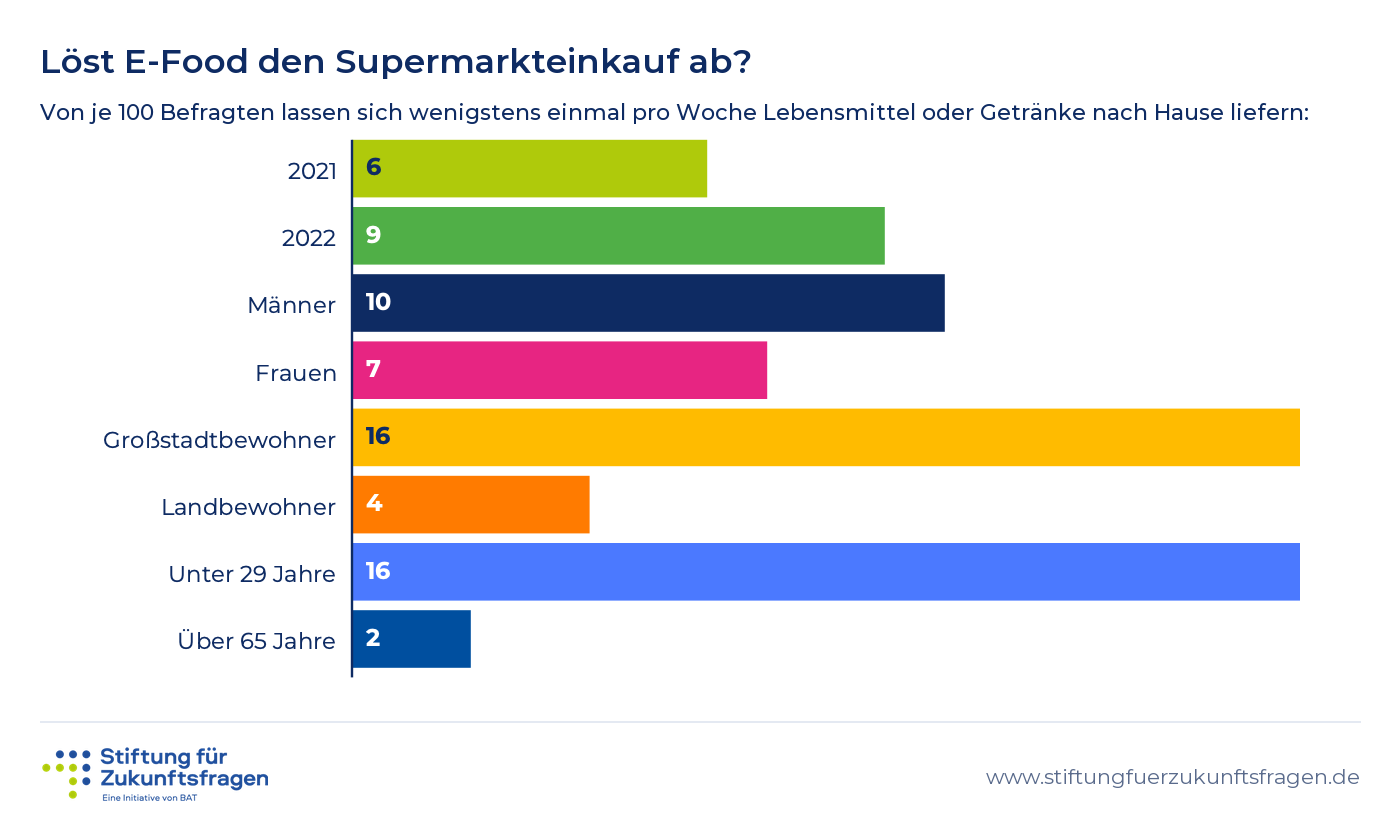
Out of every 100 respondents, at least once a week food or drinks are delivered to their home:
Data as table
| 2021 | 6 |
| 2022 | 9 |
| Men | 10 |
| Women | 7 |
| city dwellers | 16 |
| rural inhabitants | 4 |
| Under 29 years | 16 |
| Over 65 years | 2 |
Result
Almost one in ten German citizens order their food or drinks online at least once a week, and almost one in four take advantage of this service every month. This represents an increase of around 50 per cent compared to the previous year. There are major differences within the population: men order food more often than women, people in cities are four times more likely to order online than those in rural areas and young people are eight times more likely to order online than retired people.
Reasons
- It's convenient and saves time. Quickly order cheese for dinner and milk for breakfast from the bus or do your weekly shopping from the comfort of your sofa - e-food can be ordered 24/7 and from anywhere.
- The pandemic was a booster for this type of shopping. Worried about catching the virus, many Germans had their food and drink delivered.
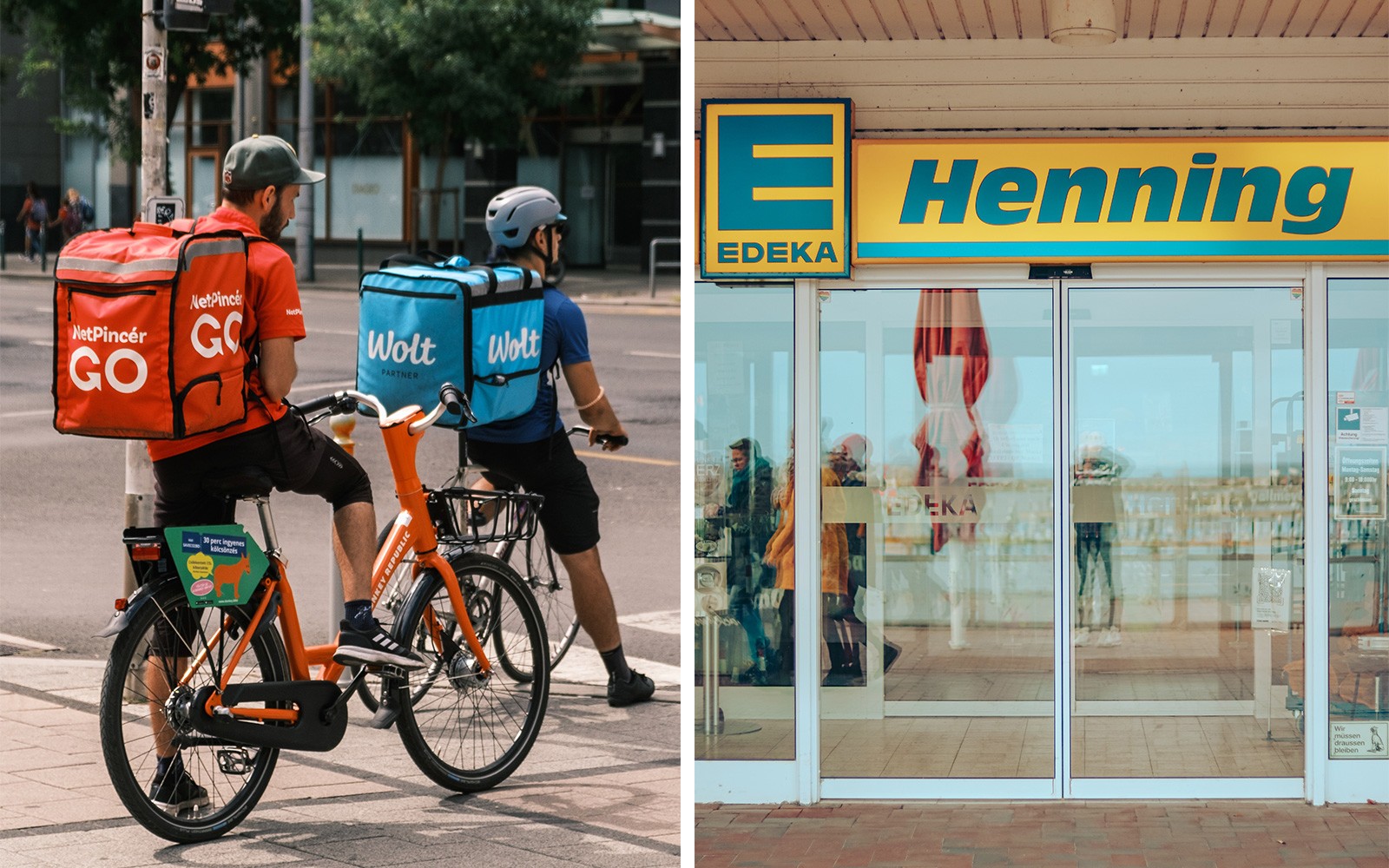
- As demand grew, so did supply: While initially only individual supermarkets offered this service, the market is now penetrated by numerous providers - Rewe, Edeka and Co. are faced with companies such as Gorillas, Amazon fresh and Flink or providers such as Hello Fresh and Wolt, which bring the ingredients for entire menus to your door or products from various providers.
Forecast
Supply and demand will continue to increase. In terms of price, online and offline offers are already similar today, whereby in the future delivered food and drinks will be even cheaper, as warehouses on the outskirts of cities cost less than shops with car parks in residential areas and city centres. The often poor working conditions of employees, as well as challenges in cold chains and logistics, need to be solved or improved. And in a few years' time, e-food will also be delivered by robot or drone - numerous pilot projects are already running very successfully in the USA.