

This is how Germans view 2025
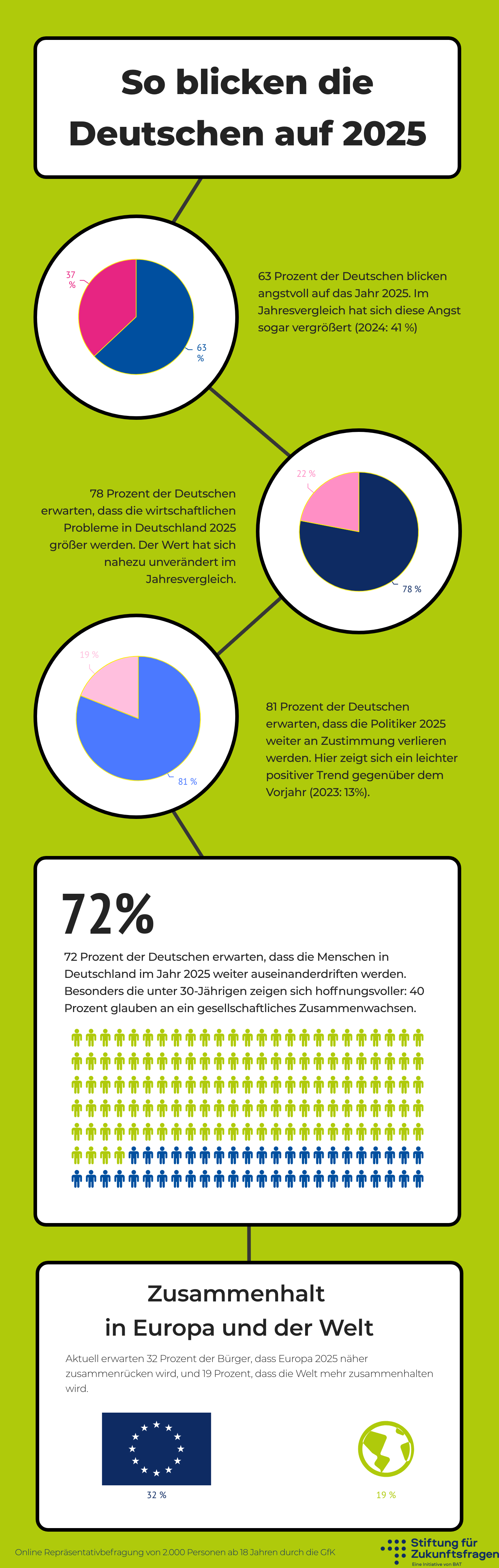
63 percent of Germans are anxiously looking ahead to the year 2025. Compared to the previous year, this anxiety has even increased (2024: 41 percent).
78 percent of Germans expect the economic problems in Germany to worsen in 2025. This figure has remained almost unchanged compared to the previous year.
81 percent of Germans expect politicians to lose further support in 2025. This shows a slightly positive trend compared to the previous year (2023: 131%).
72 percent of Germans expect that the people in Germany will continue to drift apart in 2025. Those under 30 are particularly hopeful: 40 percent believe in a process of social cohesion.
Cohesion in Europe and the world
Currently, 32 percent of citizens expect Europe to become closer together by 2025, and 19 percent expect the world to become more united.
Data as table
| Europe | 32 % |
| World | 19 % |
| apart | 72 |
| together | 26 |
| Area | |
|---|---|
| With fear | 63 % |
| With confidence | 37 % |
| Area | |
|---|---|
| Economic problems are getting worse. | 78 % |
| Economic problems are getting smaller | 22 % |
| Area | |
|---|---|
| apart | 81 % |
| closer together | 19 % |
How do people see the year 2025?
Worries, fears and a spark of hope
Global challenges - from wars and climate change to unresolved national problems, economic uncertainties, persistent inflation and migration issues - characterise the mood of German citizens. Additional political uncertainties, such as the early elections, reinforce this impression. A recent representative survey by the non-profit BAT Foundation for Future Studies shows that almost two thirds of citizens are worried and anxious about the coming twelve months. Only 37 per cent express confidence.
Economic concerns dominate
The economic situation remains a key uncertainty factor for the majority of citizens. Only 22 per cent are optimistic about economic development, while 78 per cent are pessimistic - an almost unchanged figure compared to 2023 (23 per cent positive, 77 per cent negative). Women and low-income earners in particular continue to rate the economic outlook more negatively than other population groups.
Professor Dr Ulrich Reinhardt, Scientific Director of the BAT Foundation, explains the causes of this scepticism: "The fear of a loss of prosperity, coupled with the rising cost of living, is shaping the perception of many citizens. Companies are struggling with global competition, a shortage of skilled labour, possible trade wars and political instability. Media coverage of the economic situation is further exacerbating this uncertainty."
Disenchantment with politics remains high
Alienation from political decision-makers will remain a key factor in citizens' scepticism in 2025. Almost eight out of ten respondents perceive this distance. The main reasons for this are a lack of transparency, a declining basis of trust and the increasing polarisation of political debates. Nevertheless, there is a slight positive trend: the proportion of those who generally rate the work of politicians positively has risen slightly (2023: 13 per cent).
Cohesion as a glimmer of hope
There is a small sign of confidence when it comes to cohesion in Europe: 32 per cent of citizens expect greater cooperation within the European Union, which is a slight improvement on the previous year (29 per cent). In Germany itself, the proportion of those who expect society to drift further apart has also fallen from 76 per cent in 2023 to 72 per cent. The younger generation in particular is more hopeful: 40 per cent of those under 30 believe that society will grow together. At a global level, however, the mood remains subdued: only one in five people expect a rapprochement, with younger respondents (32 per cent) three times as optimistic as the over-65s (11 per cent).
Conclusion by Professor Reinhardt
"Despite the ongoing challenges, there are initial positive signs. The growing hope for greater European cohesion and the slight increase in political approval indicate that the trough may have been reached and a slow recovery could begin. It will be crucial that politicians recognise the growing desire of many citizens for transparency, concrete measures and joint solutions and act accordingly. The future must be understood as a joint process in which the population is actively involved - this is the only way to create a willingness to support the necessary changes."