

Tourism analysis 2024
6 February 2024
German Tourism Analysis 2024: The travel wave is rolling
Core results
-
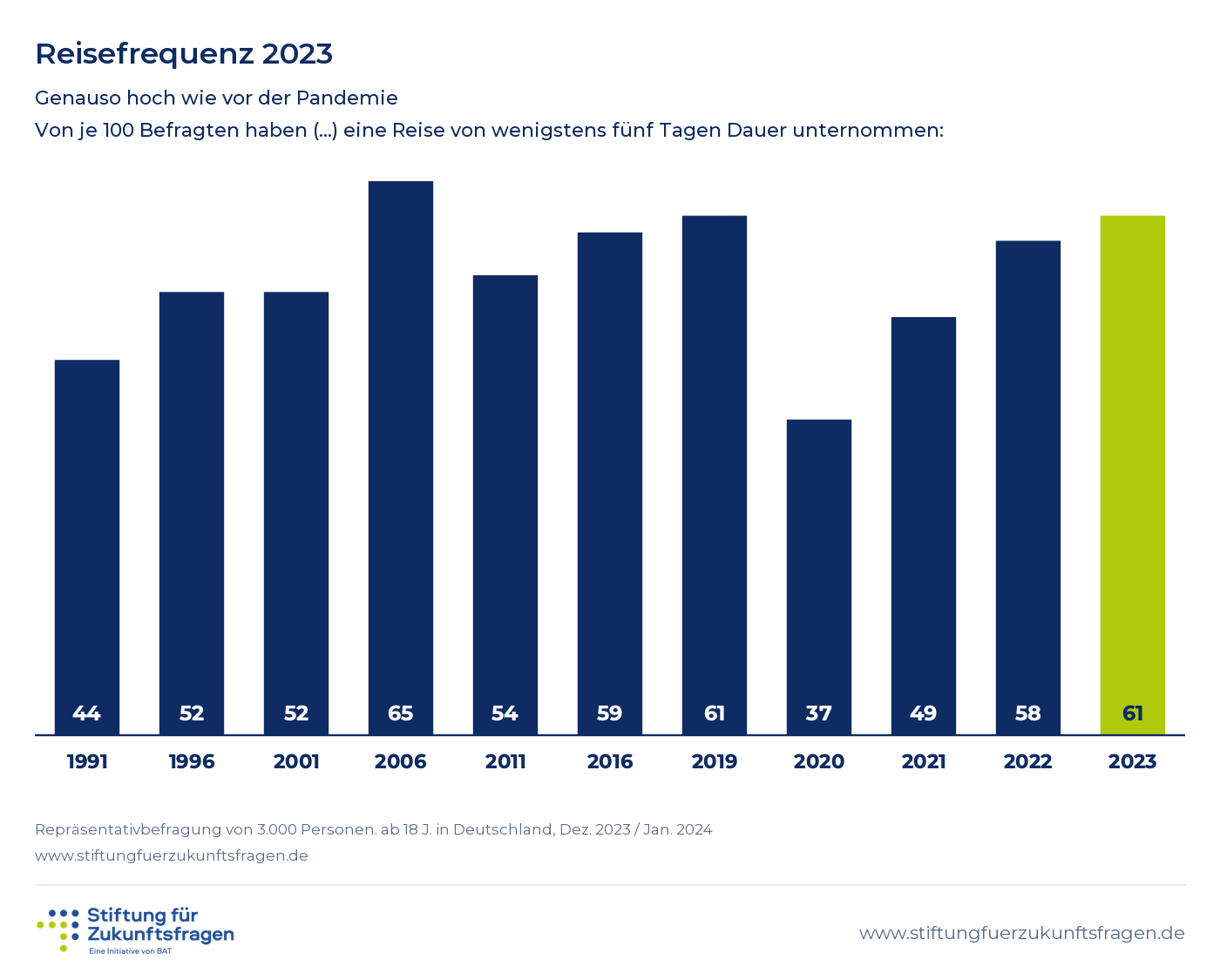
- Travel frequency increasesTrip frequency has reached the pre-corona level of 61 per cent and is thus three percentage points above the previous year's level.
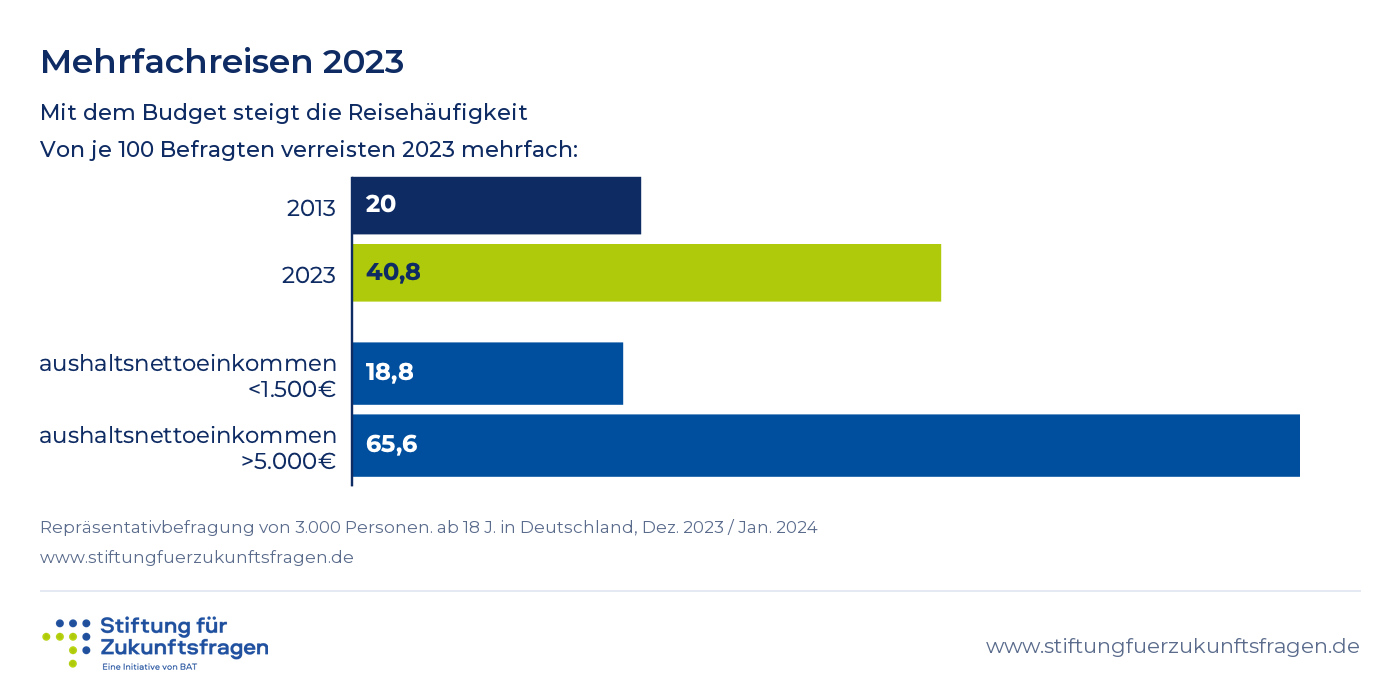
- Multiple journeys on the riseTwo out of five people travel several times a year.
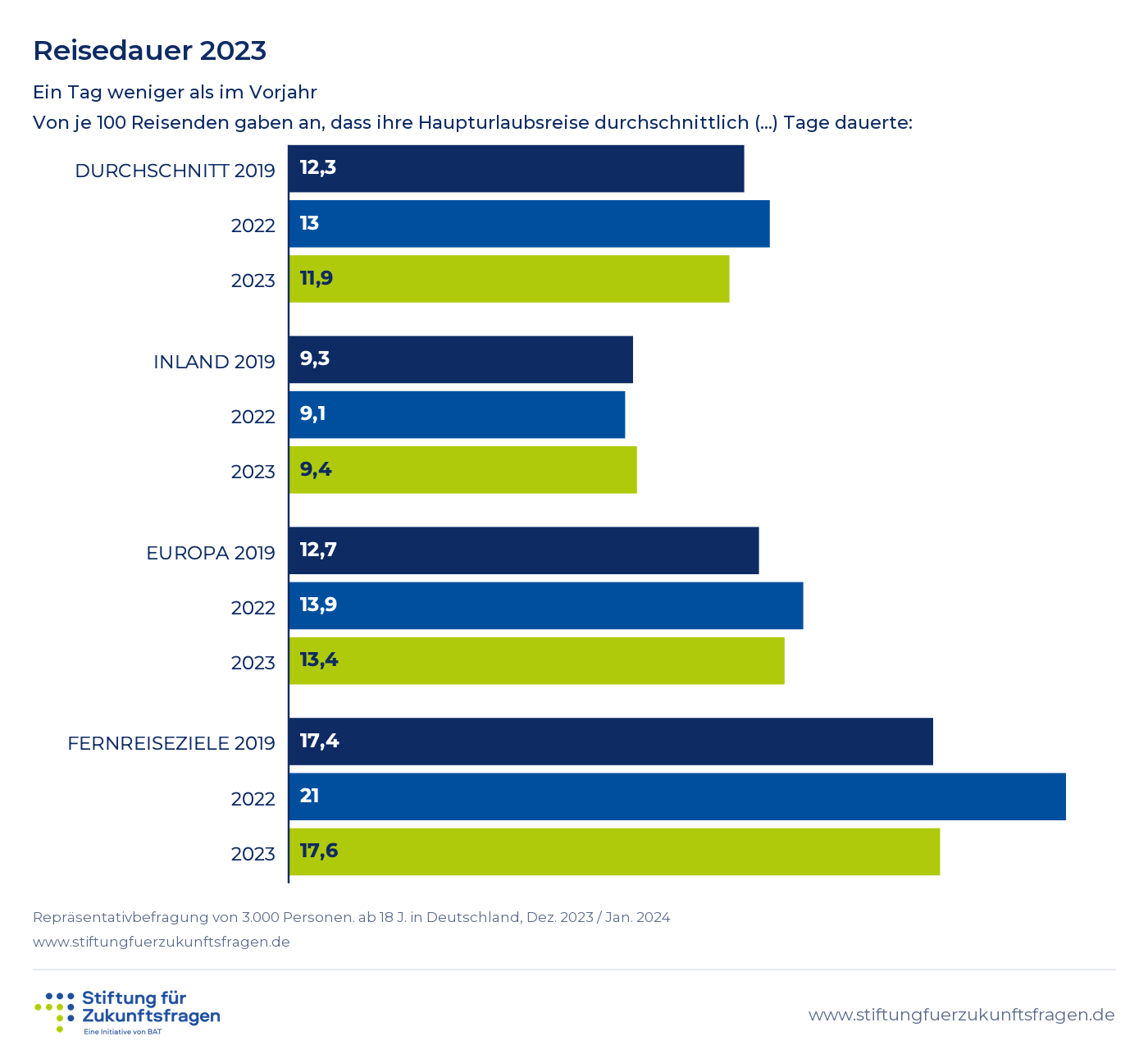
- Journey duration depends on destinationAverage journey duration in Germany increased slightly, abroad slightly decreased.
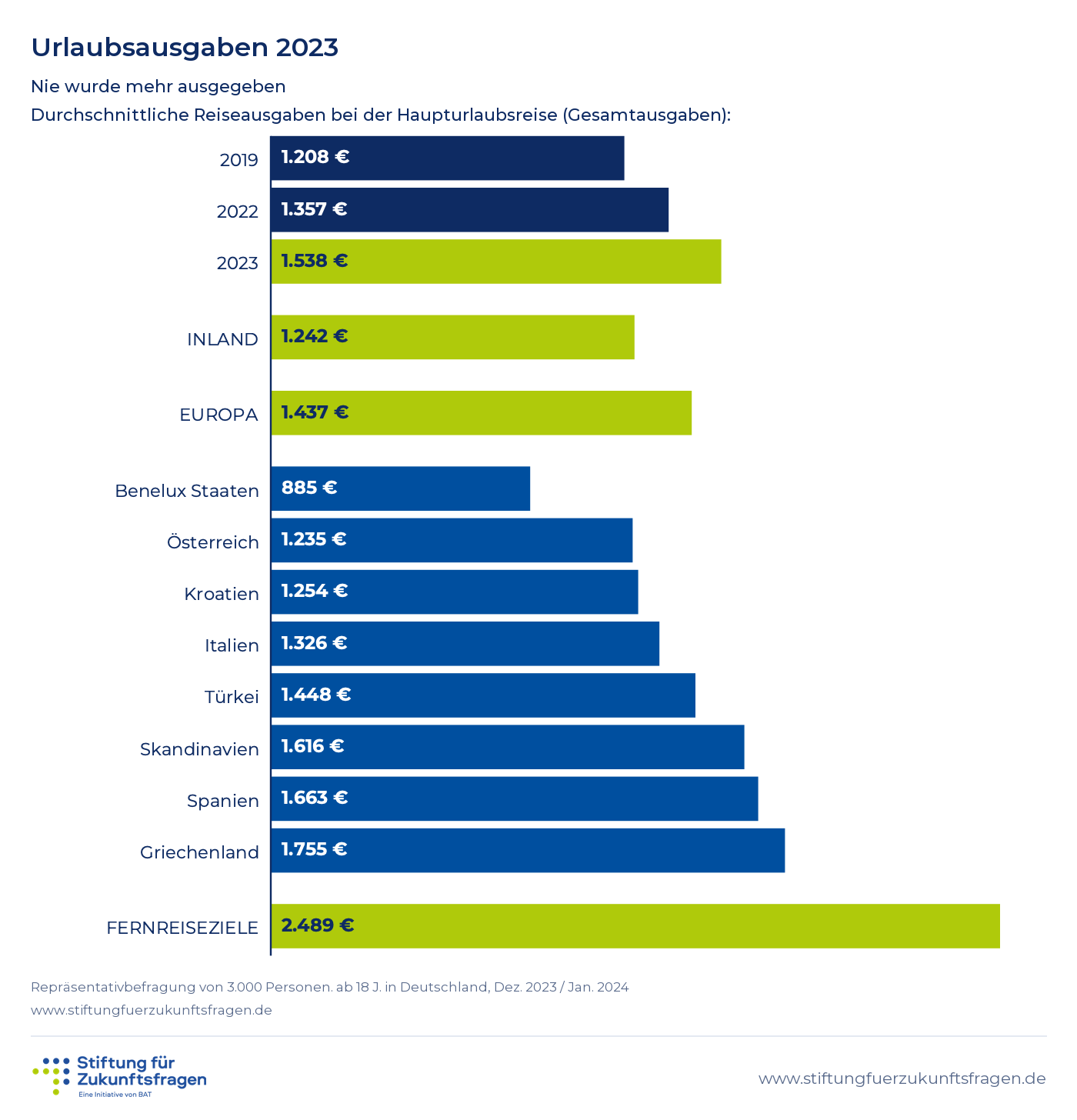
- Holiday spending at record high: Spending on holidays reached a new high with an average of €1,538 per person.
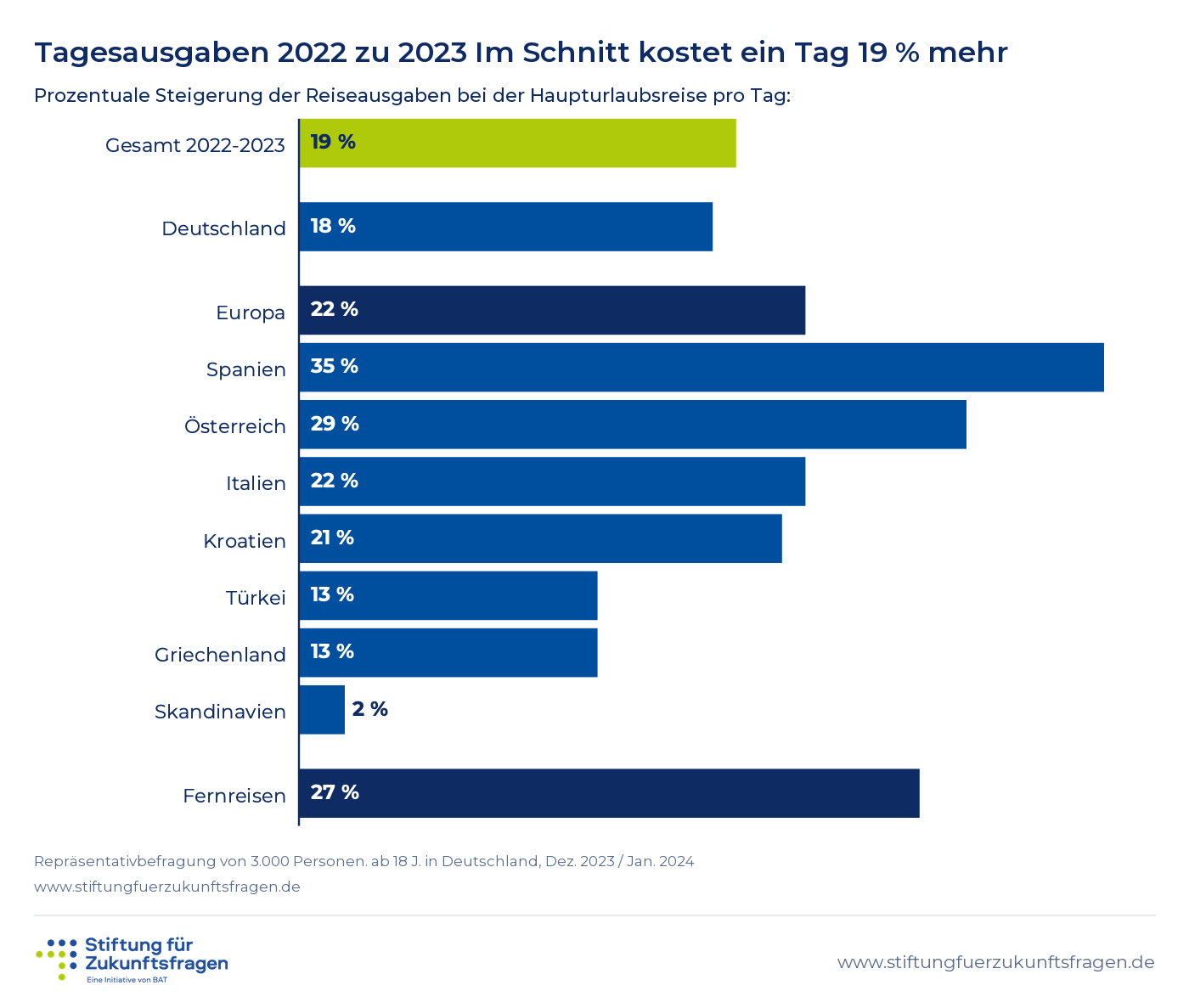
- Daily costs plus 19 per centSpain in particular saw an increase in costs per holiday day.
- Germany remains the most popular holiday destination: Despite a decline of over three percentage points.
- Spain in 1st place among European holiday destinationsScandinavia in third place for the first time, Turkey and Greece lose market share.
- Long-distance travel on the upswing: Asia particularly popular.
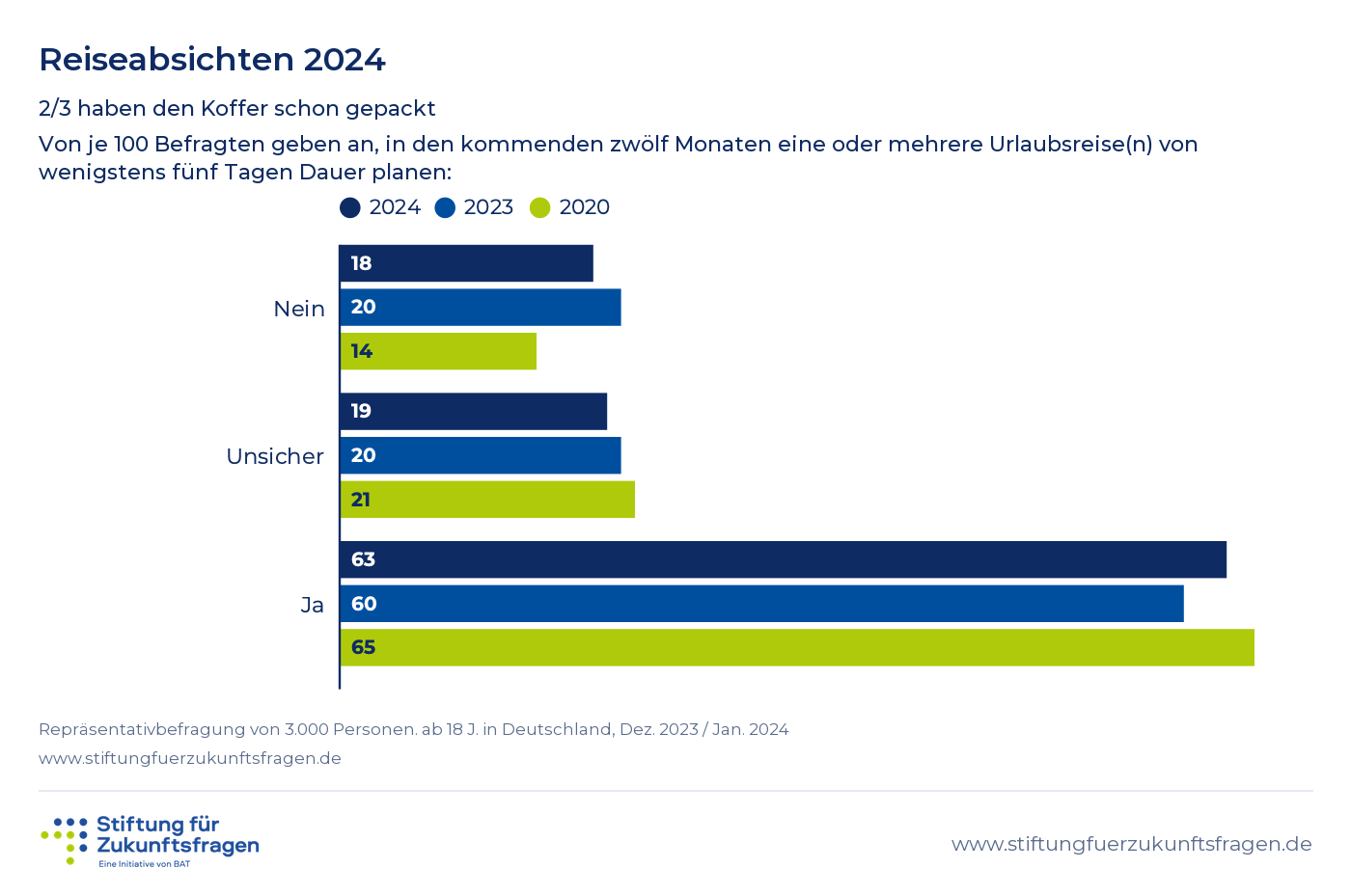
- Travel intentions increase slightlyMore than six out of ten German citizens are already planning their next trip.
- Forecast for travel destinations 2024: Long-haul holidays win again.
Despite ongoing global uncertainties, the fascination of travelling has not diminished. On the contrary, people are longing for a break and a touch of normality and are travelling more often than ever. These are the findings of the 40th German Tourism Analysis conducted by the non-profit BAT Foundation for Future Studies. For the representative survey, over 3,000 German citizens aged 18 and over were asked about their travel behaviour and travel intentions.
40th German Tourism Analysis 2024
The travel wave is rolling in
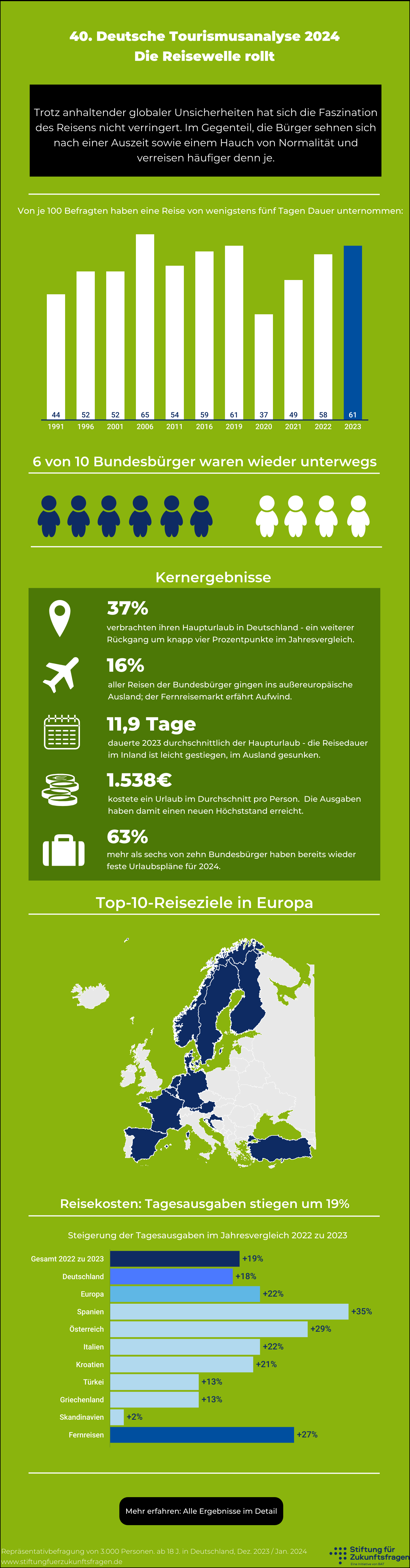
Despite ongoing global uncertainties, the allure of travel has not diminished. On the contrary, people yearn for a break and a return to normalcy, and are traveling more frequently than ever before.
Out of every 100 respondents, one undertook a trip lasting at least five days:
6 out of 10 German citizens were traveling again
Core results
37% — spent their main holiday in Germany - a further decrease of almost four percentage points year-on-year.
16% — 161% of all trips taken by German citizens were to countries outside Europe; the long-distance travel market is experiencing an upswing.
11.9 days
The average length of the main holiday in 2023 was - the duration of travel within the country increased slightly, while travel abroad decreased.
€1,538 — that's the average cost of a holiday per person. Spending has thus reached a new record high.
63% — more than six out of ten German citizens already have firm holiday plans for 2024.
Top 10 travel destinations in Europe
Travel expenses: Daily expenses increased by 19%
Increase in daily spending year-on-year from 2022 to 2023
Learn more: All results in detail
Data as table
| Total 2022 to 2023 | +19% |
| Germany | +18% |
| Europe | +22% |
| Spain | +35% |
| Austria | +29% |
| Italy | +22% |
| Croatia | +21% |
| Turkey | +13% |
| Greece | +13% |
| Scandinavia | +2% |
| Long-distance travel | +27% |
| Year | Portion | |
|---|---|---|
| Total | 1991 | 44 |
| Total | 1996 | 52 |
| Total | 2001 | 52 |
| Total | 2006 | 65 |
| Total | 2011 | 54 |
| Total | 2016 | 59 |
| Total | 2019 | 61 |
| Total | 2020 | 37 |
| Total | 2021 | 49 |
| Total | 2022 | 58 |
| Total | 2023 | 61 |
Travelling frequency
The proportion of Germans who took a trip lasting at least five days increased significantly by three percentage points compared to the previous year, reaching the same level as before the coronavirus pandemic. The frequency of travel also increased in line with income. While less than one in three low-income earners (household income under €1,500/month) travelled, 83% of higher earners (household income over €5,000/month) went on a trip. Within the life phases, families (75%) and childless couples (72%) packed their bags more often than average, while singles (50%) stayed at home significantly more often.
Travel frequency 2023
Just as high as before the pandemic
Of every 100 respondents, (...) undertook a trip lasting at least five days:
Data as table
| 1991 | 44 |
| 1996 | 52 |
| 2001 | 52 |
| 2006 | 65 |
| 2011 | 54 |
| 2016 | 59 |
| 2019 | 61 |
| 2020 | 37 |
| 2021 | 49 |
| 2022 | 58 |
| 2023 | 61 |
Multiple journeys
Ten years ago, one in five people (2013= 20%) took more than one holiday trip. Last year, twice as many holidaymakers travelled more than once (2023= 41%). One in four travelled twice, one in ten three times and one in twelve even more often. The frequency of travel increased with income. The proportion of multiple travellers among higher earners was more than three times higher than among lower earners.
Multiple trips 2023
The frequency of travel increases with the budget.
Of every 100 respondents, the following travelled multiple times in 2023:
Data as table
| 2013 | 20 |
| 2023 | 40,8 |
| Net household income <1,500€ | 18,8 |
| Net household income >5,000€ | 65,6 |
Trip duration
Compared to the previous year, the average duration of trips fell by around one day. One reason for this was the higher costs, another was the trend towards multiple trips. This particularly affected long-haul destinations, which were no longer visited for an average of three weeks, but "only" two and a half. Contrary to this trend, the length of stay at domestic holiday destinations increased, which can be attributed to the high proportion of older travellers. These travellers stayed a little longer at their destination, as they often had sufficient financial and time resources at their disposal.
Travel duration 2023
One day less than last year
Of every 100 travelers, one indicated that their main holiday trip lasted an average of (...) days:
Data as table
| AVERAGE 2019 | 12,3 |
| 2022 | 13,0 |
| 2023 | 11,9 |
| DOMESTIC 2019 | 9,3 |
| 2022 | 9,1 |
| 2023 | 9,4 |
| EUROPE 2019 | 12,7 |
| 2022 | 13,9 |
| 2023 | 13,4 |
| Long-distance travel destinations 2019 | 17,4 |
| 2022 | 21,0 |
| 2023 | 17,6 |
Travelling expenses
Spending on holidays reached a new record level in 2023 and averaged €1,538 per person. On average, a family of four spent more than 6,000 euros on their main holiday. A holiday in Germany was around 200 euros cheaper than in other European countries, although the correspondingly shorter duration of the trip within Germany must be taken into account. In terms of foreign destinations, the most money was spent on a holiday in Spain or Greece.
Daily holiday costs also reached a new high of 129 euros. Compared to the previous season, travellers spent 19 percent more. Daily costs rose particularly sharply in Spain, Austria and long-haul destinations, while prices in Scandinavia remained fairly stable. In Germany, costs rose by twenty euros to a total of 132 euros and are now above the European average - despite significantly lower travel costs. Prof Ulrich Reinhardt, Scientific Director of the BAT Foundation for Future Studies: "The increased spending on holidays shows that travellers are willing to pay a little more for their holiday experiences. At the same time, however, the effects of inflation and high demand, which have led to higher prices, are also making themselves felt.
Holiday expenses 2023
Never was more spent
Average travel expenses for the main holiday trip (total expenses):
Data as table
| 2019 | 1.208 € |
| 2022 | 1.357 € |
| 2023 | 1.538 € |
| INLAND | 1.242 € |
| EUROPE | 1.437 € |
| Benelux countries | 885 € |
| Austria | 1.235 € |
| Croatia | 1.254 € |
| Italy | 1.326 € |
| Turkey | 1.448 € |
| Scandinavia | 1.616 € |
| Spain | 1.663 € |
| Greece | 1.755 € |
| DISTANCE-FREE DESTINATIONS | 2.489 € |
Daily expenses 2022 to 2023: On average, a day costs 19 % more.
Percentage increase in travel spending on the main holiday trip per day:
Data as table
| Total 2022-2023 | 19% |
| Germany | 18% |
| Europe | 22% |
| Spain | 35% |
| Austria | 29% |
| Italy | 22% |
| Croatia | 21% |
| Turkey | 13% |
| Greece | 13% |
| Scandinavia | 2% |
| Long-distance travel | 27% |
Destinations
In the past travel season, German citizens presented a wider range of interests and destinations than in previous years. This reveals the diverse needs and preferences of holidaymakers and brought new guests to numerous destinations. With a market share of 37 per cent, Germany was once again the preferred main destination in 2023. Compared to the previous year, however, holiday regions in Germany recorded a drop of 3.5 percentage points. Only the holiday regions in Lower Saxony and Baden-Württemberg bucked this trend.
In terms of foreign destinations, Spain and Italy were able to extend their top positions. Scandinavia came in third place for the first time. For Reinhardt, Sweden, Norway, Finland and Denmark were particularly popular due to their image.
"Many travellers associate the Nordic countries with nature, safety, a high standard of quality, atmosphere and great hospitality"says the head of the foundation. The ease of travelling by car also plays an important role. Greek and Turkish holiday destinations, among others, recorded losses, which was mainly due to increased local costs.
Long-haul holidays were also in demand last year and almost reached pre-corona levels again - despite higher flight costs. Countries in Far East Asia were particularly popular and were able to significantly increase their market share. However, all other destinations outside Europe also saw year-on-year growth.
Reinhardt: "Germans are (once again) ready to explore the world and discover foreign cultures. They show a curious interest in distant destinations, want to broaden their horizons and gain new experiences".
Domestic travel destinations 2023
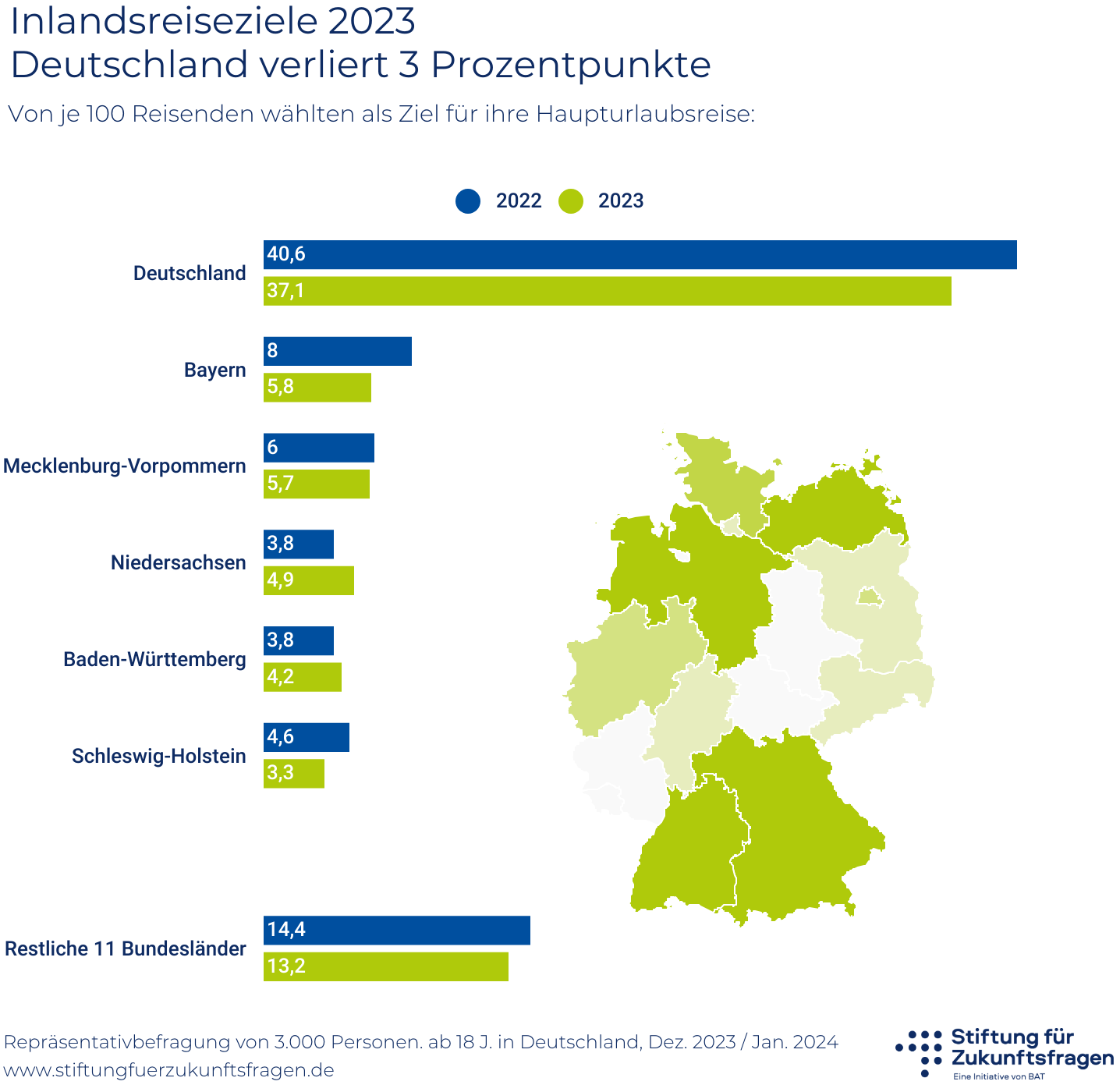
Germany loses 3 percentage points
Out of every 100 travelers, the following destinations were chosen for their main holiday trip:
Data as table
| 2022 | 2023 | |
|---|---|---|
| Germany | 40,6 | 37,1 |
| Bavaria | 8 | 5,8 |
| Mecklenburg-Western Pomerania | 6 | 5,7 |
| Lower Saxony | 3,8 | 4,9 |
| Baden-Württemberg | 3,8 | 4,2 |
| Schleswig-Holstein | 4,6 | 3,3 |
| Remaining 11 federal states | 14,4 | 13,2 |
Top 10 European travel destinations: Scandinavia overtakes Türkiye
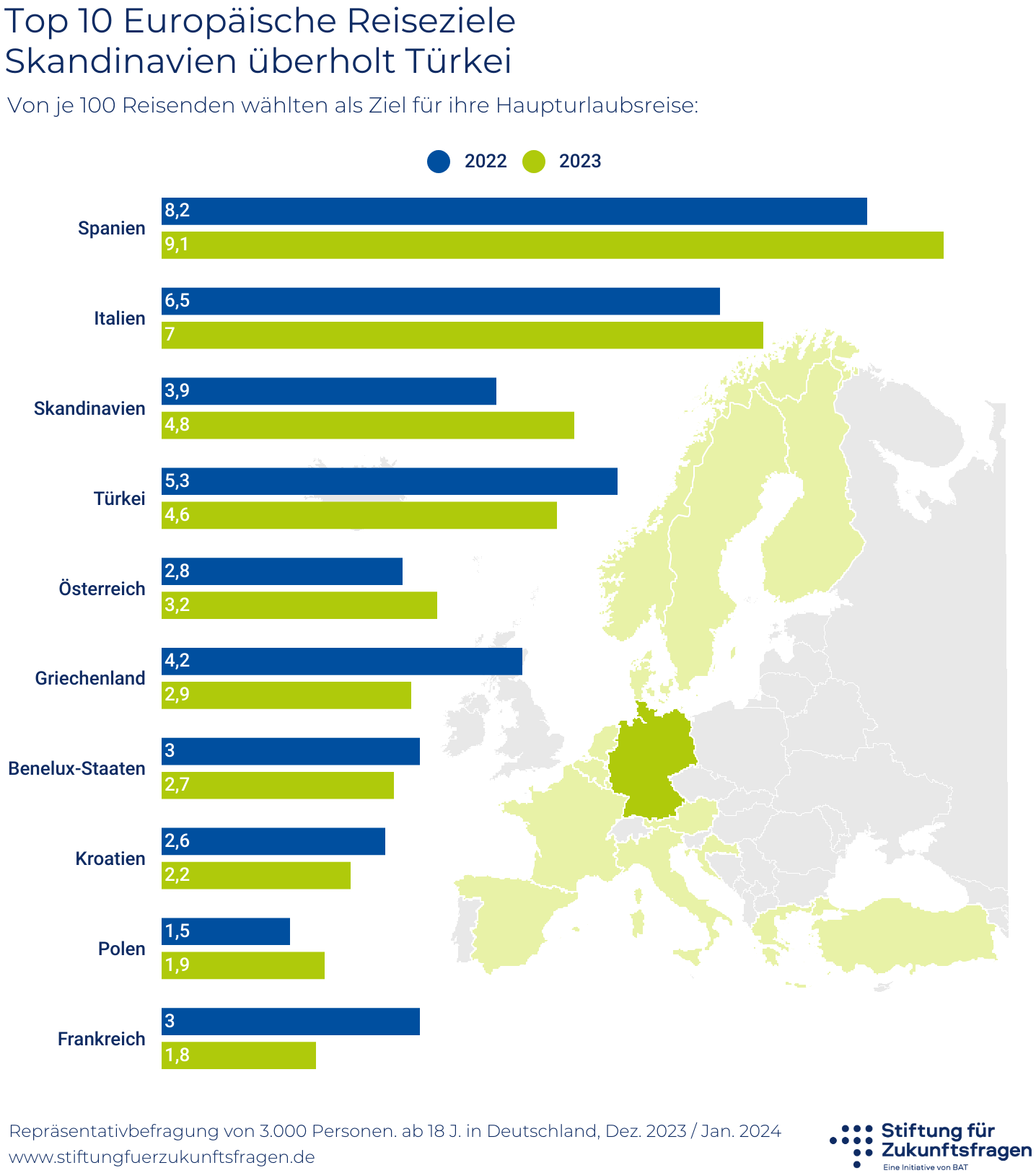
Out of every 100 travelers, the following destinations were chosen for their main holiday trip:
Data as table
| 2022 | 2023 | |
|---|---|---|
| Spain | 8,2 | 9,1 |
| Italy | 6,5 | 7 |
| Scandinavia | 3,9 | 4,8 |
| Turkey | 5,3 | 4,6 |
| Austria | 2,8 | 3,2 |
| Greece | 4,2 | 2,9 |
| Benelux countries | 3 | 2,7 |
| Croatia | 2,6 | 2,2 |
| Poland | 1,5 | 1,9 |
| France | 3 | 1,8 |
Long-distance travel destinations year-on-year: Recovery continues
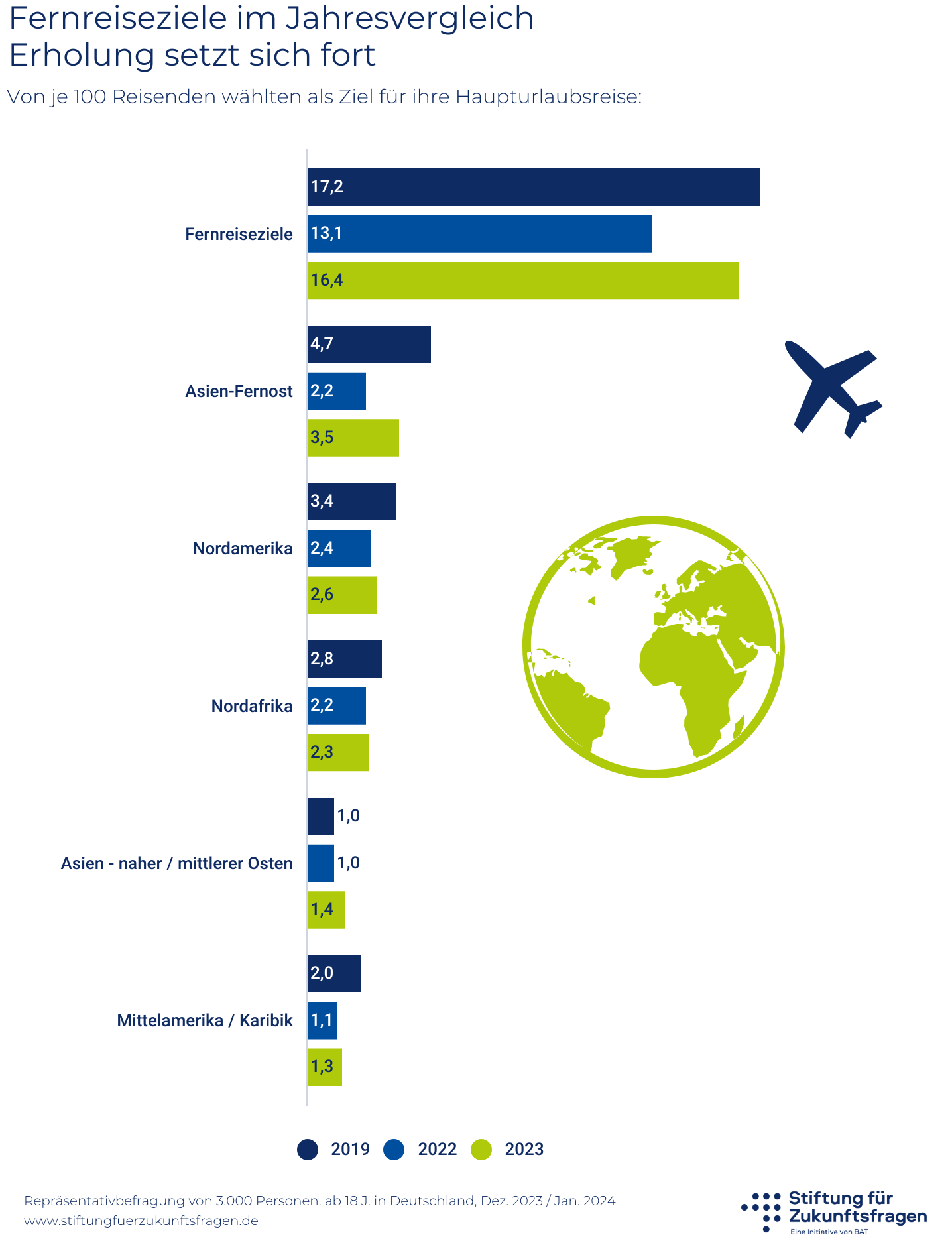
Out of every 100 travelers, the following destinations were chosen for their main holiday trip:
Data as table
| 2019 | 2022 | 2023 | |
|---|---|---|---|
| Long-distance destinations | 17,2 | 13,1 | 16,4 |
| Asia-Far East | 4,7 | 2,2 | 3,5 |
| North America | 3,4 | 2,4 | 2,6 |
| North Africa | 2,8 | 2,2 | 2,3 |
| Asia - Near/Middle East | 1,0 | 1,0 | 1,4 |
| Central America / Caribbean | 2,0 | 1,1 | 1,3 |
Travelling intentions
There are signs of a great desire to travel in Germany over the next twelve months. Almost two thirds are already planning to take at least one holiday trip and only just under one in four are already certain that they will not be travelling in 2024. These figures illustrate how willing Germans are to realise their dreams despite the ongoing uncertainties. In terms of travel destinations, the trend towards foreign holiday destinations will continue, although Germany will remain the most popular destination this year.
Professor Reinhardt's conclusion: "Travelling allows you to break away from everyday life and recharge your batteries. It contributes to personal development and creates memories. Despite all the challenges, travelling will therefore remain a central part of many people's lives in 2024, and they are prepared to spend a lot of money on it."
Travel plans 2024
Two-thirds have already packed their suitcases.
Of every 100 respondents, one or more holiday trips of at least five days each are planned in the next twelve months:
Data as table
| 2024 | 2023 | 2020 | |
|---|---|---|---|
| No | 18 | 20 | 14 |
| Unsure | 19 | 20 | 21 |
| Yes | 63 | 60 | 65 |
Method:
GfK survey institute | field period December 2023 / January 2024 | 3,000 respondents aged 18-74 years | online